|
Exorcist Master (1992) |
 |
 |
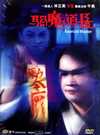
 Father Ng is appointed to re-open the chapel at Wine Spring Town, in which a priest was killed twenty years ago. A rabbi strongly restricts him because of the evil spirits living inside. Meanwhile, the dead priest becomes a super vampire and kills David, who intends to smuggle drugs by vampire shepherding. Now this super vampire controls all the corpses and is going to turn the whole town upside down! (Universe) Father Ng is appointed to re-open the chapel at Wine Spring Town, in which a priest was killed twenty years ago. A rabbi strongly restricts him because of the evil spirits living inside. Meanwhile, the dead priest becomes a super vampire and kills David, who intends to smuggle drugs by vampire shepherding. Now this super vampire controls all the corpses and is going to turn the whole town upside down! (Universe)
 Drawing upon a set of seemingly incompatible influences, Wu Ma’s Exorcist Master was released in 1992. Belonging to that eccentric group of films that Mr. Vampire previously popularised, this film aims to build upon the foundation that these earlier films established. On paper Exorcist Master seems promising, but could this film, released seven years after Mr Vampire, provide viewers with something special? Drawing upon a set of seemingly incompatible influences, Wu Ma’s Exorcist Master was released in 1992. Belonging to that eccentric group of films that Mr. Vampire previously popularised, this film aims to build upon the foundation that these earlier films established. On paper Exorcist Master seems promising, but could this film, released seven years after Mr Vampire, provide viewers with something special?
Wu Ma’s film was released during the waning years of the supernatural-horror/kung fu/comedy subgenre. The 1980s may have given birth to this genre, but it found itself somewhat extended into the next decade, with the late, great Lam Ching-Ying still so honourably and persistently willing to reprise what has to be his most common role. The vampire-buster (or one-eye browed priest) character makes a return here, but the film makes an attempt to differentiate itself somewhat by incorporating some East-Meets-West elements - for the film puts Chinese mythology, Taosim up against Catholicism and Dracula!
Those unfamiliar with the Chinese depiction of vampirism may be surprised to learn that the typical un-dead in Hong Kong cinema are soulless, zombified, superhuman and cursed with chronic stiff-joints and muscles – this rigor mortis effect explains their hypnotic and relentless hopping towards their horrified victims. Their personalities are gone, their human desires are absent, and they are interested in nothing but securing more victims. They can mix equal parts of horror and comedy at will, with a dedication to slapstick that might make Buster Keaton look like a casual dabbler. To see that ‘Exorcist Master’ (for a good deal of time) puts these conventional ingredients aside in favour of a more Western, or even Hammer film style of vampirism, is quite unusual, if not at times confounding. Gone is the stiffened, superhuman living corpse – he’s replaced by a caped Westerner with a widow’s peak and overgrown canines (a la Christopher Lee).
The script is fairly simplified, and at times seems to almost stall. Chao Lu Chiang (responsible for some of Jackie Chan’s earliest scripts), injects a light-heartedness and comedic tone throughout the film, but these distractions while humorous, really only give a hunger for some core story and action. And so the lightweight plot mostly finds our characters dropping in and out of the newly refurbished village church (til now believed to be haunted or cursed) more than anywhere else, and director Wu Ma certainly gets the mileage out of this dimly lit, quasi-Catholic house of worship. Most of the films action takes place here (or similar locales), but it is a slightly different style of choreography to other films in this category. Technical martial arts is mostly absent from the film, rather we are given a more acrobatic, brawling choreography reminiscent of Chin Siu Ho’s performance in the original Mr Vampire, employed rather skilfully by Collin Chou. Secondary action is supplied by the surprisingly apt performance of Yue Hong, who has a surprisingly blank filmography. But those looking for big hits or clever prop-play may be let down, for the action while competent, is not really all that memorable or special. Neither are the locations incorporated into the action sequences cleverly, and so they lack the sense of urgency and desperation required to portray a real threat in the power of vampirism.
Visually speaking, the film is shot well enough, with a reasonable attention to the rhythm of the action. Wide, generous shots are absent though, except for the odd exterior establishing shots. But it is certainly visually that the film makes its most lasting impression, for it is soaked in a blue wash of artificial light for most of the running time. As a matter of Hong Kong cinema convention, this is not an unusual choice in films dealing with the supernatural. Indeed blue and/or green lighting may be the equivalent of the West's impossibly dark and blood-red imagery in their horror scenes, and is used to indicate the paranormal or supernatural. Where Mr Vampire applied this technique cunningly, it was Mr. Vampire 3 that previously set a limit to this viewer's eyes for the overuse of that surreal, otherworldly lighting technique. It's obvious that Exorcist Master is now the reigning champion…
There are only a handful of exterior shot scenes, and a fraction of those are shot in daylight; this gives the film both a reason and an excuse to dress its sets in such a deep colourisation. This choice harms the film more than it improves it though, and it has an effect every director fears for: a lack of distinction between key scenes, and a kind of homogenisation of locations and sets between most scenes. The atmospheric lighting eclipses the content of the scenes at times, and action sequences are often described as a black and blue montage of flips and falls, with choreography detail and continuity paying the price.
If these ingredients weren't odd enough, we are treated to some truly bizarre behaviour from the ghost hunter throughout the film. Less and less does he confront his problems and enemies head-on, and maybe the idea was to expand the character's repertoire of skills beyond 'mere' physicality, but it's somehow sad to see the poor man resorting to disguising himself as an old woman, feigning a feeble mind and body. Sure, it is to an end, but the awkwardness outweighs the laughs. Could the step back from action be due to Lam Ching-Ying's illness - something he never revealed until it was in its final stage?
Wu Ma’s greatest failure in this film is that the villains show no real menace, and if they do, it’s only fleetingly. With no suitable power to balance the exorcist master’s and students abilities, the film virtually crawls towards its finale, where the cultural clashes hinted at above are only briefly touched upon, never mind explored thoroughly. This means the film never really strays from where previous films have been, and the promise of some sort of showdown of incompatible beliefs indicated early in the film never really materialises. References to William Friedkin’s masterpiece (The Exorcist) are tossed in for good measure, but the terror that originally accompanied them has been lost in Wu Ma’s fleeting application of them.
Exorcist Master is a hard film to complain too much of though, for how many films have tried to incorporate such a list of bizarre themes, all why balancing physical comedy and martial artistry? It’s clear that some of the earlier efforts made with similar material are far superior, but without the direction or at least passing influence of Sammo Hung, most supernatural kung-fu comedies tend to wear themselves out under the demanding act of balancing the eclectic elements required. It is worth seeing the film for its exoticness (as well as Lam Ching-Ying’s typically solid performance), but it can’t be savoured, moment-to-moment like Mr. Vampire or Encounters of the Spooky Kind can. Like one of its own victims, Exorcist Master may very well be the walking dead of the genre.
|
|
 |
Ryan Gobbe 12/14/2010 - top |
 |
|
Gallants (2010) |
|
|
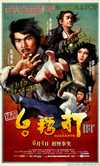 Cheung, a young real estate agent who dreams of learning kung fu is bullied into repossessing the tea house of some honest village folk. He accidentally meets kung fu practitioners Tiger and Dragon who have been tending their martial arts master for thirty years in the same tea house while he was in a coma. The master suddenly awakes and their lives change. They have to settle some decade-long scores.
Try to imagine a hip, modern film starring authentic, graying 1970’s kung fu cinema heroes who lose their fights. It’s a crazy film concept but Gallants works like a charm. This remarkable 2010 film by Hong Kong writer/director duo Clement Cheng and Derek Kwok turns the traditional kung fu pian on its head, spins it around and gives it a kick in the pants, all the while embracing the genre and its incredible cast with genuine love and respect. A delightfully zany exploration of maturity, Gallants, for all its frolicking iconoclasm, never loses sight of the old school spirit of righteousness, heroism, and the true meaning of victory.
The gallants in Gallants come in all shapes and sizes. The unlikely young man who learns from his elders is Cheung (Wong You Nam), a bullied, directionless real estate agent forced by his boss to help corrupt businessmen coerce honest village folk out of their land. This wimpy loser lacks purpose and strength, and when he accidentally discovers an elderly, belligerent kung fu master named Tiger (Bruce Leung Siu Lung), he latches on. Tiger and his stoic companion Dragon (Chen Kuan Tai) have waited thirty exhausting years for their martial master Law (Teddy Robin Kwan) to awaken from his duel-induced coma. When the businessmen try to coerce Dragon and Tiger into giving up the martial club that they have preserved in the form of a teahouse, the master suddenly awakens. Pong (Michael Chan Wai Man), the old school boss of a glitzy, shallow martial arts studio announces a kung fu tournament and Master Law’s teahouse team must begin training to face their competitors both in and out of the ring.
The Gallants story is character-driven, fresh and clever but thematic conflict oppresses the screenplay’s spontaneity. A woefully mistimed rallying speech injects unwelcome hackney into an otherwise meaningful story, and formulaic metaphors dampen the climax. By the time the high point arrives, though, it almost doesn’t matter because the remarkable characters have already taken full control of the story. They are very much alive, laden with eccentricities and flaws that become, in the hands of compassionate filmmakers, completely loveable. Master Law, the catalyst for the heroes’ new lease on life, is a sparkling jewel. As the ancient, sick, hilariously intolerant and imperious playboy sifu, Robin’s sly yet joyful wit illuminates his every onscreen moment and is the perfect comedic counterpoint to his loyal, harassed kung fu team. Dragon and Law’s doctor (supporting actress Siu Yam Yam), gently, often touchingly, express the weary patience born of too many burdens and a life unfulfilled. And they command respect for their loyalty and sacrifice. Because they are all fraught with forgivable emotional conflicts, almost every role in Gallants (teahouse babe J.J. Jia excepted) is charming, if not downright captivating. Directors Cheng and Kwok’s gift for intrapersonal conflict sets up a heady emotional brew that quite naturally leads to interpersonal bickering, arguing, and the ultimate conflict resolution: violence.
Ah, the kung fu. Legendary lions Chen, Leung and Lo Meng are given the chance to use their famous skills while martial champion Li Hai Tao, finally given real screen time as Pong’s son, passes the torch of honorable martial power to a younger generation. Master Yuen Tak’s choreography is a successful blend of old and new school fighting styles with a pleasing variety of moods and intentions that range from a light, brilliant spoof of the traditional teahouse brawl to the thunder of self-sacrificing heroes. Tak uses each man’s natural physical strengths to make the mature actors come off as powerful, albeit damaged and vulnerable fighters. The original film title, Fists of Dignity, captures the essence of their physically and emotionally painful screen fights. But it is the trick of placing actors Chen and Leung into a new millennium story that delivers a deeper meaning: along with their characters Dragon and Tiger, the elderly legends themselves are given validation, blessing, and redemption. Watching Bruce Leung Siu Lung, Chen Kuan Tai and Lo Meng fighting in Gallants may actually amount to a cathartic experience for some old school kung fu cinema fans.
As if all this moving emotion isn’t enough, Gallants is also a comedy. Slapstick, sound effects, cartoon visuals, Shaw Brothers references and of course geriatric jokes, abound. The humor is witty and zany but never cruel. It is, in fact, tender and sympathetic. Gallants laughs not at but with its suffering characters, which is what guarantees the film’s message of love and respect. Our gallant heroes may be losers in the ring but they are winners in the much more difficult arena of life. It is this enormous dignity that makes Gallants, despite its flaws, such a success. Buy it, watch it, watch it again, and keep your fingers crossed that filmmakers Cheng and Kwok will continue their crazy winning streak.
|
|
|
Sylvia Rorem 9/9/2010 - top |
|
|
Iron Fisted Monk (1977) |
|
|
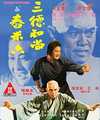 The Husker has a heart of gold although he is full of tricks. When he is a trainee at Shaolin Temple, he cuts so many corners and devises so many labor-saving ploys that he earns the open wrath and secret admiration of his holy elders. Monk Shan, the famous kung fu master, never lets his buddhist association stand in the way of wining, whoring and the partaking of dog meat. His student Niu Ching-Liang is in trouble as Niu's sister is raped by the Manchu and has committed suicide. The monk tells Niu to bide for time. (Joy Sales)
Having starred and appeared in countless films by the time 1977 rolled around, Sammo Hung Kam Bo had yet to make his (inevitable?) transition to directorial duties. It’s true that up until this point, his skilful action direction had made its mark across dozens of films, yet his true invention and artistry was so far un-revealed. Having worked under many directors himself, could the opera school graduate and action star bring something new to the genre? 1977’s Iron-Fisted Monk is a career landmark for Sammo, and a milestone for this genre of film itself.
First, we are met with a disciple at the Shaolin Temple, (and here Casanova Wong makes his brief and only appearance as he spars with Husker (Hung)). Husker himself is the perfect hero-to-be: an able, generous, honest, hard-working but suitably impatient student with that crucial hint of mischievousness. But it’s his restlessness that is the driving force of the film; for his unsettled spirit (shown early on as a cause for his sleepless nights) forces him into action, breaking with friendships, his youth and the strict Shaolin code altogether.
Iron-Fisted Monk, while on the surface is at least a great action film, is also at heart a story of uprising, rebellion and personal vendetta. The Manchus (rulers of China in the Qing Dynasty), are the one enemy in this film, and their cruelty and dominance is demonstrated to the point of disgust. Their acts of violence and exploitation are directed at any Chinese – even children. This injustice is at odds with what Shaolin stand for (and common decency for that matter). Interestingly, this theme is later echoed in Jackie Chan’s Project A II, where the rebellious and true-to-life efforts of Sun Yat-sen are entwined with Jackie’s constabulary.
Husker finds solidarity within Brother Tak, played sturdily by Chan Sing. Here, an interesting mix of perspectives is found in the film – we have Tak as a father figure, experienced, righteous and refined. He is contrasted with the inexperienced and naivety of Husker’s youth. Husker’s impatience is kept in check by the Buddha-praising monk; he talks of exercising tolerance and sound judgement, yet we sense a massive, sleeping and ominous force behind these words. It is only after a humiliating scene where Husker is dishonoured by the Manchus that we discover Brother Tak’s limits. We see that even Shaolin, when faced with no other alternative, will kill for the good of the community.
The action sequences in this film are choreographed with care. We see a mix of playfulness and power in Huskers techniques, and we see a brutal effectiveness in Tak’s. Suitably, the villains in the film are each distinguishable in both their outfits and choice of weapons. Yes, the Manchus play dirty, and their brutality is absurdly enhanced by their eccentric hair-styles and deadly accessories. One specialised cold-hearted killer wears a mane of wild hair and swings a handy ball and chain, called a meteor hammer. But Sammo Hung’s attention to details, while not as formed as in his later films, still comes across clearly for the most part.
Edited with attention to the martial art rhythm, we see in the film controlled phrases of action rather than a drawn-out brawl or tiresome, careless blow-trading. Deliberate, powerful and fluid, the hand-to-hand scenes are memorable. Weapons are used throughout, but only fleetingly and frequent enough to add variety. And the Manchus really do pose a threat in these scenes; henchmen with glass-jaws they are not. Iron Fisted Monk develops the Manchurian characters as ruthless, violent and heartless, so viewers are sure to recall these characteristics when the showdown inevitably comes – the revenge is sweet, and arguably righteous.
Here, blows are traded fairly equally and it’s a spontaneous team-up of Husker and Tak’s techniques that set the finale apart from similarly plotted films. True, the lightning-fast action sequences and invention that appeared later in Hung’s career was yet to be perfected here, but the finale in the film is still a pleasure, and is somewhat of a pre-cursor to Hung’s emerging talents.
For a directorial debut, this film certainly is challenging. The cruelty shown really does come out of nowhere, and this plunges the film into a different class. No longer are we watching bad guys from a distance when they misbehave. We get up close and distressingly personal with scenes of rape and brazen cruelty. Sammo Hung had made two marks here. He showed that action choreography could be art all over again, and that his film direction has a noticeable hard edge (to be explored further later in his career). It’s a satisfying, demanding and worthy film, and the debut of one of Hong Kong’s most important directors.
|
|
|
Ryan Gobbe 10/24/2009 - top |
|
|
Bodyguard: A New Beginning (2008) |
|
|
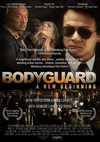 A New Beginning' focuses around the story of Leung, the bodyguard of a Chinese Triad boss, Wong, to whom his loyalty is unrivaled. Living in Hong Kong, Wong requests that his bodyguard travel to the UK to protect a young British woman, whose true identity is known only by Wong himself. Even his own errant son, Yuen, is kept in the dark, which leads to a betrayal that threatens to destroy the family and all that his father has worked hard to protect.
This energetic piece of low budget filmmaking highlights some of the best components of gritty British filmmaking with a heavy dose of Hong Kong style action and attitude. To top it off, the film features an all-star cast, incorporating the talents of both iconic veterans and rising stars – all working under the watchful eye of a bold and multi-talented young director!
Leung (Vincent Sze) is the loyal bodyguard of Wong (Richard Ng), the boss of a powerful Hong Kong Triad. Amidst growing tension between Wong and Kai (Cary-Hiroyuki Tagawa), the vicious head of a rival family, Leung is sent to the UK to protect a British woman whose identity is known only to Wong. As the Triad war in Hong Kong spills out into the streets, Kai, working with Wong’s treacherous son Yuen (Carl Ng), sends enforcers to the UK to kidnap the mysterious woman Leung is protecting.
After Leung finds her, the pair struggle to evade Kai’s ever-growing army of thugs on the streets of London. Meanwhile in Hong Kong, Wong desperately tries to keep his organisation intact as the business’ foundations are weakened by his son’s disloyalty and Kai’s relentless pursuit for Wong’s territory. A final confrontation in Hong Kong will bring about an end to the carnage, but at a price none of them could have predicted.
Following his previous work in Underground, director Cheung Chee Keong proves once again he is one of the most skilled, technically capable young independent action-film directors working in the UK today. Capturing a dark, unsettling tone of drama and a fast paced, brutal and stylish flair for the action sequences, the film treads new ground and blends multi-genre conventions.
Shot neck-deep in the urban metropolis of both London and Hong Kong, the visual style benefits from the diverse range of settings and captures a unique, visceral energy that could never be achieved filming in a studio. Although the story doesn’t necessarily present anything new, there are enough innovative ingredients incorporated into the mix to deliver something fresh and exciting for both old-school and aspiring fans of Asian and action cinema.
In addition to the sights and sounds of the locations, the cities are captured in an honest, almost homely light, perhaps an indicator of the director’s sentiment towards London and Hong Kong (Cheung was born and bred in England while his folks are from Hong Kong) - despite the obvious inclusion of the criminal underworld who exists there. For residents of either city, many locations will be familiar and instantly recognizable, making the action appear all the more real and immersive.
With a variety of athletic, acrobatic movements and brutal, close-quarters fighting, the action offers plenty of variety, courtesy of action directors Anthony Carpio and Chan Man Ching. To top off the high calibre actors in the film, the physical stars are equally impressive and serve up a nice variety of loathsome villains and noble heroes. Mark Strange makes a particularly intimidating villain, and seamlessly embodies the image of a human wrecking ball, relentlessly pursuing Vincent Sze with monstrous attacks and thunderous force.
One of the strongest elements of the film can be seen in the wonderful range of actors, representing a crossover between different generations of Hong Kong stardom. Richard Ng is far removed from his comedy persona made famous in the Lucky Stars series and shows his range as a great character actor. Portraying Wong, he is both humble and, when he needs to be, incredibly ruthless and aggressive.
Cary-Hiroyuki Tagawa reminds audiences why he is still considered one of the most enjoyable onscreen villains to watch, and dominates his scenes with quiet menace and calculated evil.
Carl Ng is perhaps the most surprising, having appeared in the likes of New Police Story and Legend of the Dragon, here he delivers a strong leading role playing Yuen, the conflicted and confused boss’ son. Yuen is brutal one minute, sympathetic the next, but always dangerous and very unpredictable. Carl captures the venom of this bitter character while still holding on to the underlying sense of remorse, ensuring the character is never dull to watch, adding layers of conflict to the impending gang war between Wong and Kai.
In the lead, Vincent Sze occupies the centre of the story with stylish appeal, playing the cool, silent hero who bursts into defensive action at the drop of a hat. The romance that brews between him and Chloe, the woman he is sent to protect, is predictable but shows the softer side of this tough-as-nails Triad bodyguard.
In all, the movie offers up a wide range of stars stepping into characters outside normal typecasting. This elevates the story beyond expectation and injects a new, character-driven quality of drama into the action and gangster themes.
Veteran actor, Shing Fui-On, even features in a cameo role, further evidence of the possible homage to good old fashioned Hong Kong gangster moviemaking. Certainly one of the most appealing points of the movie is the range of stars appearing together onscreen – a real achievement in casting this many talented, high profile actors in a single project.
Bodyguard is a great achievement as a low-budget piece of multi-national action cinema, breaking new boundaries while still managing to deliver traditional conventions for genre purists. It is seeing these traits; veteran actors and rising stars, or classical stories with fast-paced filmmaking, that gives the film its integral character and identity. Cheung Chee Keong is reinventing British action cinema as we speak and, trust me, you don’t want to miss out.
(Read our interview with director Cheung Chee Keong)
|
|
|
Mike Fury 6/17/2009 - top |
|
|
Shaolin Wooden Men (1976) |
|
|
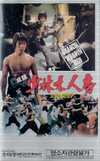 Jackie witnesses his father's death by the skilled hands of a martial arts master with an unknown killing technique. Jackie vows to become a Shaolin monk and avenge his death (not very Buddhist of him...), but soon finds that he's the chump of the class. After befriending a variety of shaolin masters, each of whom teach Jackie a particular style of kung fu (drunken, killing, slippery snake, etc.), Jackie suddenly finds himself good enough to go give the beats to the 100 "wooden men" whom all shaolin (in this flick anyways) have to beat to get the funky haircut. Jackie then proceeds to go around laying the beats on everyone, but shows his humility and compassion at the end. (amazon.com)
Anyone who follows the martial arts film genre would have already seen countless films set in or around Shaolin with an array of temples and monks. What could any film propose that was new in this setting? And what dramatic elements or eccentric plot devices could be imagined to breathe life into this over-crowded sub-genre, where the dynastic architecture has already been worn smooth by innumerable film crews?
Well, director Lo Wei’s answer to this is Shaolin Wooden Men - an early Jackie Chan film that is somewhat of a stand-out moment between Lo’s and Chan’s lengthy collaboration, (or contractual obligation!). So, with a reasonably routine back-story and setting, could Shaolin Wooden Men do anything progressive for the genre?
The film makes use of most conventions of the genre, but they are never painful and mostly enjoyable. Chan is used liberally, and his versatility is more than a vague suggestion, as if everyone on board were just beginning to wake up to just what he was capable of. Throughout the first reel, we see him, as Dumb Boy, take on teachings from any one who offers. His open-minded and dedicated characteristics are admirable; the silent, sensitive and respectful character he plays really does draw a note of empathy.
This is at odds to some of his more playful roles, yet it no less pleasurable to watch, and it’s certainly refreshing at times. Also, we see true rivals for Dumb Boy throughout the film in the shape of delinquent gangs and hardened criminals. Often, he is pitted against older and more experienced fighters, and the idea of Dumb Boy playing a victimised underdog is presented. Interestingly enough, real-life opera school colleague Yuen Biao is featured fleetingly in one of these clashes, and has the pleasure of delivering a single line of dialogue in a later scene!
Director Lo, (and presumably Chan Chi Hwa) may not be innovators of cinema, but his film is shot well, and edited with much tighter control and attention to the martial arts rhythm than most kung fu flicks from this era. The film is less susceptible to the common loss of momentum that occurs to so many of these films (typically around the second act), but we are asked to sit through some initially confusing moments regardless. Sudden costume changes and leaps in continuity do occur occasionally.
Nevertheless, there is a good distinction between the dialogue/plot-driven scenes and the action sequences in the film. And there are even some creatively framed scenes that showcase a natural symmetry: one in particular shows a nice pull-back shot of Dumb Boy practising on top of a waterfall. There are some syncopated and rushed-through moments however, and the common speed-of-light dramatic plot changes of this genre do occur – these may pass over your head if you blink!
Certainly, it has the cast, locales and at least the standard ingredients for a promising film, including a provocative title. Considering the mixed quality that Lo is renowned for, this turned out to be one of his more well-rounded and cohesive productions. Compare this film to say, Fearless Hyena 2 - a troubled production and study in maniacal editing; this film might be close to Lo’s Citizen Kane.
It could be said that yes, the action and choreography itself is fairly traditional, and Chan purists may be displeased with his action sequences; but you must admit that they are solid and fairly snappy, and more importantly they are framed and shot pretty well – nothing important is missed. Fighting in the film is typically two opponents exchanging techniques on fairly even ground sans weapons as Chan’s trademark action sequences were yet to be unearthed. Occasionally spears and poles are used is some of the sequences, but never by Chan and they are not that memorable anyway.
In this respect, Shaolin Wooden Men is no ground-breaker. However it has something else to offer. Instead of the routine plot of two rival factions competing for dominance of their respective styles/schools, we have a master and student, youth and age, humility and arrogance pitched against one another. In this sense, the film makes a comment to me about flexibility of mind and body. What will triumph, the old, tested and rigid, or the new, unknown and adaptable?
The Shaolin Wooden Men themselves represent rigidity in their movement, physicality and purpose, but their fate is sealed early on in the film. Interestingly, the films draw-card, its soulless, mechanised and brutal wooden men, turn out to be much less threatening than a human man. Could this be a comment on human nature itself?
|
|
|
Ryan Gobbe 5/28/2009 - top |
|
|
Way Of The Dragon (1972) |
|
|
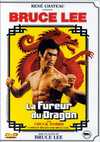 Tang Lung travels to Rome to assist family friends in running their restaurant. When he discovers they are being pressured by a local mafia gang to sell their property, he is the only one with the courage and physical ability to stand up to the aggressors.
This, Bruce’s most commercially appealing Golden Harvest title blends lighter elements into the bruising carnage for the very first time. Set in the highly impressive locations of Rome, Bruce demolishes the local mafia, sports a pair of nunchakus and takes on Chuck Norris in one of the most impressive finales of all time.
Tang Lung (Bruce) is sent to Rome to help family friends with their restaurant. A local gang is trying to force them to sell their property, and escalating threats of violence are putting them in a very difficult position. Only Tang Lung has the courage and physical ability to stop the gangsters, and so with this newly arrived problem obstructing his chances to acquire the restaurant, the gang boss hires two martial artists to come to Rome and eliminate Tang Lung.
Compared to the heavy-going theme of Fist Of Fury, Way of the Dragon takes a lighter approach to an otherwise grim story, utilising comedy and scenes of lighter content amidst stunning martial artistry that builds even further on his previous work. The opening scene in which Tang Lung unknowingly orders several bowls of soup, eats too much and later has many visits to the toilet seems to set a deliberately lighter feel for the whole film. Later, the naïve, boyish Tang Lung is unknowingly picked up by a prostitute and when this is realised ‘in the flesh’, bursts out of the room in a panic.
The ‘country bumpkin’ role Bruce would often occupy is used here to full entertaining effect. Some of the most enjoyable scenes come when Tang Lung shows his new friends at the restaurant his kung fu skills, and some of the men argue over which martial arts style is superior. The physical action is incredible and Bruce takes on an even greater number of opponents than ever before as attackers move in from every angle and don’t even come close to making contact. The severity of this predicament is cranked up even more in the legendary double nunchaku sequence when the gangsters learn a whole new lesson in pain as they are brutally dropped to the ground by a weapon of such elegant destruction.
Another comedy moment comes when, after a crowded fight, the final remaining villain obtains a nunchaku and attempts to use it himself but accidentally knocks himself on the head. A final hit of Bruce’s nunchaku puts him out cold and only the human debris of Bruce’s fighting force remains.
Even more so than in earlier work, Bruce is shown here to be a one man wrecking ball, but once again never using physical violence to cause trouble, but only in standing up for those that need help – and teaching the bullies a hard lesson! Without doubt the film’s most iconic scene comes in the awe-inspiring final showdown between Tang Lung and Colt (Chuck Norris). With the wonderful backdrop of the coliseum, this is a modern day gladiator battle of martial arts skill. As with Bruce’s many other fights, a great deal of philosophical commentary can be found in the way the fight is conducted, and this should be watched closely and appreciated in its own right. It is an extremely satisfying fight between two incredibly gifted martial artists, the only downside is that is doesn’t last longer.
The Young Master’s Wang In Sik also has a brief role as a Japanese fighter, the other martial artist hired by the gang boss along with Colt. His role is small but he does have the opportunity to show what he can do in those years before he would work with Jackie Chan more prominently. Way of the Dragon was to be Bruce’s last complete Hong Kong project, as his next work would consist of Robert Clouse’s Enter the Dragon and the unfinished Game of Death. Here Bruce demonstrated his talents as not just a martial artist or charismatic onscreen star, but as a director as well, and for the first time he took the wheel, guiding the ship himself, having had both his previous Golden Harvest projects directed by Lo Wei.
Way of the Dragon outdid both his previous films at the Box Office, making it his most financially successful release at that time. To this day, it remains one of the most popular martial arts films of all time, still showing in movie theatres all over the world.
|
|
|
Mike Fury 1/30/2009 - top |
|
|
Enter The Dragon (1973) |
|
|
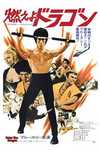 Lee, a martial arts expert, is recruited by a government agency to infiltrate a combat tournament which exists as a front for an illegal drugs operation.
‘The First American Produced Martial Arts Spectacular’ is a colourful, energetic multi-national production that finally acknowledged Hollywood’s acceptance of Bruce Lee.
A martial arts expert named Lee is hired by a government agency to infiltrate the operation of a criminal, organising a martial arts tournament to front his illegal drugs empire. Han, the leader of this operation, is a former member of Lee’s Shaolin Temple turned rogue and Lee is considered the best candidate to enter the tournament as a competitor, giving him the opportunity to investigate.
Robert Clouse’s martial arts blockbuster is a louder, colourful, more commercially appealing Bruce Lee film, a co-production between Golden Harvest and Warner Bros. For this reason it is undoubtedly Bruce’s most recognized film in the western market, but not of quite the same quality seen in his earlier Hong Kong work.
There are elements of Bruce’s philosophy in certain scenes, such as in a discussion when asked by his teacher “what is the highest technique you wish to achieve?” to which he answers; “to have no technique” (a nod to the Jeet Kune Do philosophy). Unfortunately, this takes a backseat compared to the ‘spy’ orientated story and typically Hollywood buddy movie style final partnership between Bruce and John Saxon.
That said, the visuals and production are arguably the most engaging aspects of the film, whereas the action generally looks good but doesn’t appear to offer anything radical for Bruce to handle. The best fight, by far, is Lee’s battle against Han’s bodyguards in his underground cave. A young Jackie Chan famously gets his neck broken in this scene, and Bruce upgrades weaponry from a staff, to a pair of short sticks, and finally acquiring a nunchaku. This sequence looks great and easily on par with his scenes dispatching multiple villains in Fist Of Fury and Way of the Dragon.
For the most part, the fights look visually ‘cool’ but don’t do anything to stretch the respective players. A prime example of this is Lee’s fight against O’Hara (Bob Wall), which has remained one of my Bruce favourites simply because it looks so good in slow-motion and Bruce’s moves, although minimal, look excellent – namely his powerful side kick! Yet it’s unfortunate the pair didn’t have the chance to do more (Bob Wall would later play a small role in Game of Death but that was for the 1978 version Bruce was sadly not around for).
Enter the Dragon is still a very good and highly entertaining film, but dilutes so many of Bruce’s trademarks evident in his earlier work that is certainly comes across as a compromised film for a foreign market. As a result, it did not do as well in Asia as his previous work, but has still acquired ‘classic’ status by most fans around the world that still enjoy it as a slightly differently flavoured Bruce Lee adventure. This shouldn’t deter fans from enjoying what was to be Bruce’s final finished project, as shortly after completing the film he passed away due to a cerebral edema. In such an incredible career cut tragically short, Bruce achieved more than most would hope to accomplish in a lifetime career.
Believing films were far more effective than books to communicate messages and ideas to an audiences, Bruce inserted ideas and innovations into his action-packed martial arts work, giving audiences entertainment and education decades after his death.
While Enter the Dragon may not rank alongside the likes of Fist Of Fury, it still carries its own merit, made a hugely successful Hollywood / Hong Kong crossover and importantly paved the way for eastern stars and filmmakers in the west today.
|
|
|
Mike Fury 1/30/2009 - top |
|
|
Game Of Death (1978) |
|
|
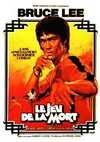 Martial Arts actor, Billy Lo, fakes his own death after a crime syndicate makes an attempt on his life when he refuses to sign their contract. Disguising himself and planning revenge, he must come out and face his adversaries when his girlfriend is kidnapped.
Bruce Lee’s unfinished project was completed in his absence five years after his death, comprising of a new story, new actors, stock footage and finally Bruce’s own footage he shot shortly before filming Enter the Dragon. The results are as mixed as the reviews but ultimately equate two different films which should be judged on different grounds.
Game of Death was Bruce’s next film project after his hugely successful Way of the Dragon. He drafted early notes and ideas regarding the story and put together something totally different to anything he’d made before. Having shot footage of the films action-packed finale inside the famous pagoda tower, he had to abandon his planning on Game of Death to film the Hollywood / Hong Kong co-production, Enter the Dragon. Shortly after completing this film, he tragically passed away and all that remained of Game of Death was the footage he shot for the ending. The unfinished film remained in the vaults of Golden Harvest until Enter the Dragon director, Robert Clouse, picked up the project in 1978 and created an entirely new film to accommodate Lee’s unreleased work.
Some paint this as a tribute, others would argue it was a shameless cash-in scheme, but fans will really need to make their own decision. The story was re-written and given a crime caper feel as actor, Billy Lo (Bruce Lee), must take on a ruthless crime syndicate who will do whatever it takes to make him sign their contract. Billy Lo is played by a host of Bruce Lee doubles, including Kim Tai Jung and future star, Yuen Biao. Stock footage of Bruce in earlier projects is also incorporated and never quite fits with the 1978 film, appearing grainy, occasionally out of focus (due to editing), and altogether clumsy.
One redeeming feature of the 1978 portion of the film is the inclusion of Sammo Hung as action director who recalls he wanted to give the action scenes a suitably Bruce Lee style. For fans the most relevant part of Game of Death comes for the truly stunning finale in which Bruce battles through the pagoda tower, taking on a martial artist of a different style on each floor. This makes the whole film worth while, as Bruce goes head-to-head with excellent opponents in some of his best fights ever seen. He even employed some of his own students to play the roles, just as he had done for Robert Baker in Fist of FuryFist Of Fury
Among the most memorable is Dan Inosanto as Pasqual, a martial artist who fights with weapons. First he uses a pair of sticks but quickly switches to the nunchaku, which culminates in a truly jaw-dropping one-on-one nunchaku battle between him and Bruce. This is my all-time favourite of Bruce’s many fights as it demonstrates the incredible skill and technique of both men using the weapon. Also, it does not overstretch the realism of being hit by a nunchaku. Making contact with the weapon is not excessive but when it does hit, it counts.
Bruce’s Jeet Kune Do philosophy is highly important throughout his portion of the film. It is an invaluable approach of his character in fighting and ultimately defeating adversaries who are fixed to a rigid system. In contrast, Bruce is able to adapt and alter his technique to fit different circumstances. Kareem Abdul Jabbar, who is guardian to ‘the floor of the unknown’ embodies this and therefore makes the most superior opponent – fighting with no identifiable style. It is only through discovering and exploiting the weakness of this physically giant adversary that hero, Billy Lo, will stand a chance to win.
This is what is meant by two different films - The 1978 Robert Clouse crime adventure with body doubles and stock footage, and the 1972 Bruce Lee action-packed martial arts showcase which concludes the story. The end is undoubtedly the highlight but the complete package is worth seeing for Bruce fans and anyone interested in the film’s history.
Although far from being outstanding, some of the ‘so bad its good’ edits and attempts to insert Bruce into a new scene mean there is more to be enjoyed than many reviews would have you believe. Fans are advised to treat it as a bit of fun.
|
|
|
Mike Fury 1/30/2009 - top |
|
|
Big Boss (1971) |
|
|
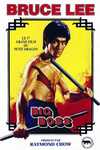 Cheng, a young Chinese man, travels to Thailand to work and stay out of trouble, but his new life is interrupted when fellow workers at the local ice factory, where he is based, begin disappearing under suspicious circumstances. With no law working on his side, he must find the truth himself.
Bruce Lee’s first film for Golden Harvest was a powerful, awe-inspiring demonstration of this new star’s incredible physical talents and undeniable charisma.
Cheng (Bruce) is a young Chinese man sent to work for family friends in Thailand; earning money and keeping out of trouble. Upon arriving, he soon begins working at a local ice factory and quietly adapts to his new surroundings, enjoying his host family’s company and working hard. Whenever confronted by trouble, Cheng steps aside and avoids getting involved, instead grasping his jade necklace which rests around his neck as a reminder not to fight. But when friends at work start disappearing mysteriously and the owner of the factory may be responsible, Cheng must take matters into his own hands and expose the truth.
After a pre-dominantly TV-based career in the US that didn’t prove as successful as he would have liked, Bruce returned to Hong Kong and signed a contract with Golden Harvest, which proved to be hugely successful for the new company spearheaded by former Shaw Brothers producers, Raymond Chow and Leonard Ho. The Big Boss redefined the conventional style of martial arts action at the time, and contrasted greatly with other popular forms of onscreen combat, such as swordplay and adventure films. In comparison, Bruce’s fighting style was quick, elegant and incredibly physical – lightning fast bursts of movement punctuated by animal howls.
Here the other characters in the story appear as shocked as a contemporary audience, in awe of the amazing talents of this man set to re-establish the martial arts film genre. We see him take on several opponents at once, demolishing them one by one with kicks so fast, the recipient wouldn’t register their arrival until it was too late. Cheng also disarms countless attackers, knocking knives and other weapons right out of their hands before dropping them to the ground with a pulverizing final punch. Importantly, Cheng is not shown to be the instigator of violence, but only steps up to defend his fellow Chinese, whose safety and security is threatened by local Thais who act as foremen for the factory, and may have involvement in his friend’s disappearance. It is only when Cheng’s symbolic jade necklace, a symbol of his restraint, is smashed in an escalating battle that his expression changes and he lets out a wild animal howl - bursting into action.
Interestingly, this comes almost half way through the film and demonstrates his real desire for an honest, trouble free existence that shows him comfortably living with his new host family and working hard in his job. When the calm is eventually interrupted, the previously restrained Cheng becomes like a caged animal being unleashed for the first time. This was the first appearance of this new generation of Chinese hero, a likeable, relatable young man who had respect and tolerance for others but would readily stand up for anyone being victimized.
While the film may not appear as complex as Bruce’s later work, both in terms of fight choreography and story, The Big Boss set the bar remarkably high for an energetic new style of action cinema never seen before. Director, Lo Wei captures the exotic location with peaceful elegance and sun-drenched scenery, contrasting greatly with the brute violence that follows. It is Lo Wei’s cinematic eye where the film looks the best, with the use of beautiful natural colour and landscape; while Bruce’s electrifying action embodies Cheng’s all-out pursuit for the truth.
A wonderful supporting cast gives Cheng the opportunity to show his gentle side prior to the action shifting into high gear. Maria Yi and James Tien shine through with particular charm, while Hon Ying Git / Han Ying Chieh makes a truly villainous adversary for Cheng’s highly memorable final showdown.
Every Bruce Lee film has its own style and The Big Boss is no exception. It remains a firm classic of the genre and set a high standard for Bruce’s subsequent work, which, amazingly, he effortlessly maintained.
|
|
|
Mike Fury 1/28/2009 - top |
|
|
Fist Of Fury (1972) |
|
|
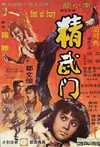 Chen, a student of legendary martial arts teacher, Fok Yuen-Gaap /Huo Yuan Jia, returns home upon hearing news that his master has died under mysterious circumstances. Before long, Chen vows retaliation against the local Imperialist Japanese school responsible for his master's death.
This electrifying piece of martial arts cinema stands as Bruce Lee’s greatest accomplishment in a tragically short filmmaking career. It redefined his reputation and remains one of the genre’s most influential films of all time.
Set in the 1930s Shanghai, Chen Zhen (Bruce) returns to the Jing Wu school, where he had studied martial arts for many years, upon hearing that his teacher Fok Yuen-Gaap / Huo Yuanjia has died. He arrives during the funeral and is devastated by the loss of his beloved master, as are his fellow students from the school. However, it is soon revealed that Master Fok died under mysterious circumstances, and may have even been poisoned by a rival martial arts academy. After it becomes apparent that a local Japanese school may be responsible, Chen vows to find out the truth behind is master’s death. Finally, having become frustrated with an ineffective police investigation and his fellow student’s reluctance to stand up and fight, Chen pursues a dangerous mission of vengeance against the Japanese who wish to subjugate the Chinese on their own land.
Fist of Fury remains not just one of Bruce’s most highly regarded films, but one of the most influential martial arts films ever made. The quality of the production, the fight choreography, the acting and relevance of themes still stand strong today. It raised the bar even higher compared to what Bruce had done previously and heightens the emotional stakes, making this a highly charged revenge-action film with obvious heartfelt social commentary.
The action scenes also up the ante after introducing his lightning quick movements and stunning physicality in his previous film, Big Boss. In the famous scene in which Chen sets foot in the Japanese dojo, he annihilates the Japanese students with brutal unarmed combat before switching to the nunchakus (his first time using them in film) and obliterating every standing opponent. In this scene he also makes two students eat the famous ‘Sick Men of Asia’ sign before walking out, leaving the Japanese scattered in agonizing pain.
Chen was a true hero, defending not only the Chinese, but in modern reflection representing all subjugated people – standing up and defending those who needed support and encouraging victims to rise up and remain united. Bruce also had the opportunity to participate in some of his most impressive fight work ever witnessed (he was co-action director on the film). The fight against the Japanese school is a prime example of this, and vastly increases the number and variety of his opponents after he took on a large group of Thais in Big Boss. Within this jaw-dropping display, he unleashes strings of chain kicks, knocking opponents to the ground, left right and centre, before raising the pain bar several notches with the nunchaku.
Later, he goes toe to toe with Robert Baker, one of his real-life students who is seen here as Petrov, a Russian fighter conducting business with the boss of the Japanese school. The Petrov fight is exceptionally tense and makes the viewer respect each fighter’s unique talents, such as Chen’s unrivalled speed and Petrov’s mighty strength and body locking ability, which Chen only escapes by biting his opponent.
The fight against Suzuki (Riki Hashimoto), the Japanese boss, is amazing to watch and appears to pay homage to the traditional Japanese swordplay genre, as Chen must take on Suzuki’s lethal katana. The influence and impact of Bruce Lee’s Fist Of Fury is undeniable, at the very least in the amount of tribute films and remakes that have been made. Fist of Fury II, starring Bruce Li (a fake Bruce Lee) is generally considered one of the better Bruce Lee ‘clone’ movies. Stephen Chow’s Fist of Fury 1991 takes a very different, comedy-orientated look at the title, while Donnie Yen’s Fist Of Fury TV series for ATV proved hugely popular in the mid 1990s, even spawning a prequel, Fist of Fury: Sworn Revenge.
The original 1972 film has earned generations of fans to this day and continues inspiring and influencing people from all walks of life in every corner of the world. Fist Of Fury is a timeless classic that will forever be remembered as Bruce Lee’s greatest work.
|
|
|
Mike Fury 1/28/2009 - top |
|
|
|